Beyond the Dollar: How US Exporters Are Closing More Global Deals by Rethinking Currency Strategy
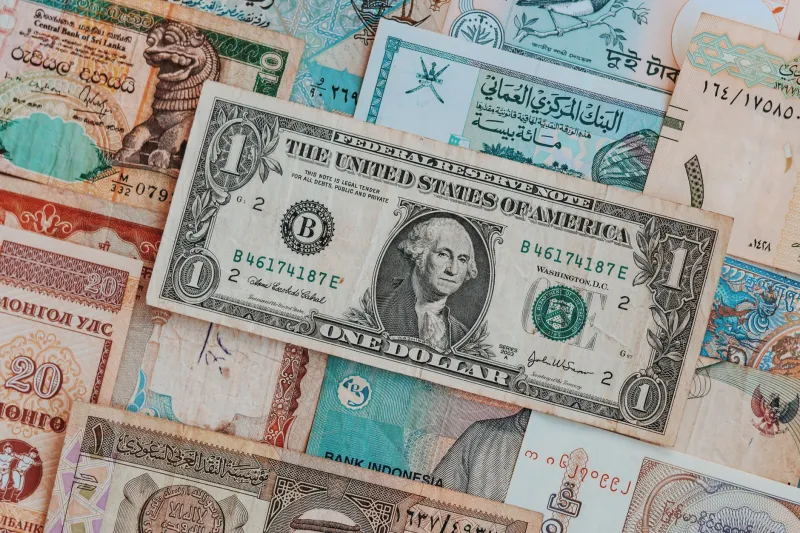
For decades, the US dollar's dominance gave American exporters a convenient default: price everything in USD, let the foreign buyer absorb the exchange risk, and move on. It was clean, familiar, and financially comfortable. It was also quietly costing companies deals they never knew they lost.
As emerging markets in Southeast Asia, Latin America, and Sub-Saharan Africa account for an increasingly significant share of global B2B trade, the assumption that buyers will simply absorb dollar-denominated pricing is being tested — and failing. In many cases, a US supplier quoting exclusively in USD isn't perceived as a stable partner. It's perceived as an inflexible one.
The Real Price of Dollar-Only Contracts
When a manufacturer in Vietnam or a distributor in Colombia receives a USD-denominated quote, the dollar figure itself is only part of the calculation. The buyer must also factor in the current exchange rate, anticipated currency volatility over the contract period, and the cost of converting funds. In markets where local currencies have historically fluctuated against the dollar — sometimes dramatically — that uncertainty can be the difference between a signed deal and a lost one.
Consider a mid-sized US industrial components supplier attempting to establish a recurring supply agreement with a buyer in Nigeria. The buyer operates in naira, sells locally, and earns revenue in naira. A USD-only contract means that every time the naira weakens — which it has done substantially over the past decade — the effective cost of that agreement rises without any change in the US supplier's pricing. From the buyer's perspective, the contract carries embedded currency risk that a competing European supplier, willing to negotiate partial euro or local currency terms, simply does not impose.
The US supplier may never learn why the deal fell through. The buyer rarely explains it that way. But the pattern repeats across markets, and the cumulative effect on an exporter's pipeline is significant.
Hedging Without a Treasury Department
The good news is that currency risk management is no longer the exclusive domain of Fortune 500 companies with dedicated treasury teams. A range of accessible tools has emerged that allow mid-market US exporters to price competitively in foreign currencies without simply absorbing the volatility themselves.
Forward contracts remain one of the most straightforward instruments available. Through a bank or a specialist foreign exchange provider, a US exporter can lock in a specific exchange rate for a future transaction — effectively converting the deal back to a known dollar amount regardless of how the market moves. This allows a company to quote in, say, Brazilian reais or Philippine pesos while maintaining predictable revenue in USD.
Currency options offer a more flexible alternative. Unlike a forward contract, an option gives the exporter the right — but not the obligation — to exchange at a set rate. This is particularly useful when deal timing is uncertain, as is common in long B2B sales cycles. The cost is the option premium, which functions as a form of insurance.
For companies processing higher transaction volumes, multi-currency business accounts through platforms such as Wise Business, Airwallex, or OFX allow exporters to hold, receive, and convert funds in multiple currencies at competitive rates. These platforms have dramatically reduced the friction of international settlement for smaller exporters who previously had few practical alternatives to correspondent banking.
Adapting the Contract Structure
Beyond financial instruments, some US exporters have found success by restructuring how deals are denominated rather than simply hedging after the fact.
One approach involves dual-currency pricing: presenting a USD base price alongside a local currency equivalent, with a clearly defined exchange rate floor and ceiling. This gives the buyer the psychological comfort of seeing a local currency figure while protecting the seller against extreme fluctuations. It also signals commercial sophistication and a genuine interest in the buyer's business reality — a subtle but meaningful differentiator.
Another strategy is currency indexing, where the contract price is tied to a published exchange rate benchmark and adjusted at defined intervals. This approach is more complex to administer but is increasingly common in long-term supply agreements across the manufacturing and agricultural sectors.
A US agricultural equipment exporter operating across East Africa reported that introducing a quarterly price review mechanism tied to published exchange rates — rather than a fixed USD price — reduced buyer attrition significantly over a two-year period. The company's finance team initially resisted the added complexity. The sales results made the case more persuasively than any internal memo could.
 Photo: East Africa, via www.mappr.co
Choosing the Right Markets for Currency Flexibility
Not every market requires the same level of accommodation. US exporters should conduct a baseline assessment of currency stability, convertibility, and local banking infrastructure before determining how much flexibility to extend.
Markets with relatively stable, freely convertible currencies — such as South Korea, Poland, or the UAE — present lower risk when quoting in local currency. Markets with restricted convertibility or significant volatility, such as Argentina or certain West African nations, require more careful structuring and potentially more conservative hedging positions.
TradeForce Global's network of verified international buyers and regional trade intelligence resources can help US exporters identify where currency flexibility is a deal-making necessity versus a negotiating nicety. Understanding that distinction is the first step toward deploying the right tools in the right markets.
The Competitive Framing Shift
The broader mindset shift required here is not purely financial — it is strategic. US exporters who treat currency accommodation as a concession are starting from the wrong premise. The more accurate framing is that local currency competency is a market access capability, no different from having a multilingual sales team or a regional distribution partner.
Companies that have made this shift consistently report shorter deal cycles, stronger buyer loyalty, and better positioning in competitive tenders where European or Asian suppliers have historically had an edge. The dollar will remain the world's dominant reserve currency for the foreseeable future. But in the day-to-day reality of international B2B commerce, the exporter who speaks the buyer's financial language — not just their product language — is the one who closes the deal.