The First Impression Problem: Why American Companies Keep Losing International B2B Deals Before They Begin

There is a particular frustration that many US export managers and business development directors know well. You have a genuinely competitive product. Your pricing is fair. Your company has a strong track record. And yet, for reasons that are never fully explained, the international prospect goes quiet — or worse, chooses a competitor whose offering is objectively inferior on paper.
This pattern plays out with remarkable consistency across industries, and the cause is rarely what American executives assume it to be. It is not the product. It is not the price. It is the approach.
The way US businesses initiate, frame, and conduct international B2B relationships is, in many cases, fundamentally misaligned with the expectations and norms of the partners they are trying to win. And the damage is done long before the first formal negotiation begins.
The Efficiency Trap: When Speed Reads as Disrespect
American business culture prizes efficiency. Concise emails, fast responses, direct communication, and rapid decision-making are considered professional virtues domestically. When exported wholesale to international contexts, however, these same qualities can register very differently.
In many of the world's most important B2B markets — across the Middle East, Southeast Asia, Latin America, and even parts of Europe — business relationships are built on trust that is developed gradually and deliberately. An outreach email that gets straight to pricing within the first two sentences, skips any personal acknowledgment, and closes with an aggressive call-to-action may feel crisp and professional to the American sender. To a prospect in Riyadh, Jakarta, or São Paulo, it can read as presumptuous, transactional, and frankly off-putting.
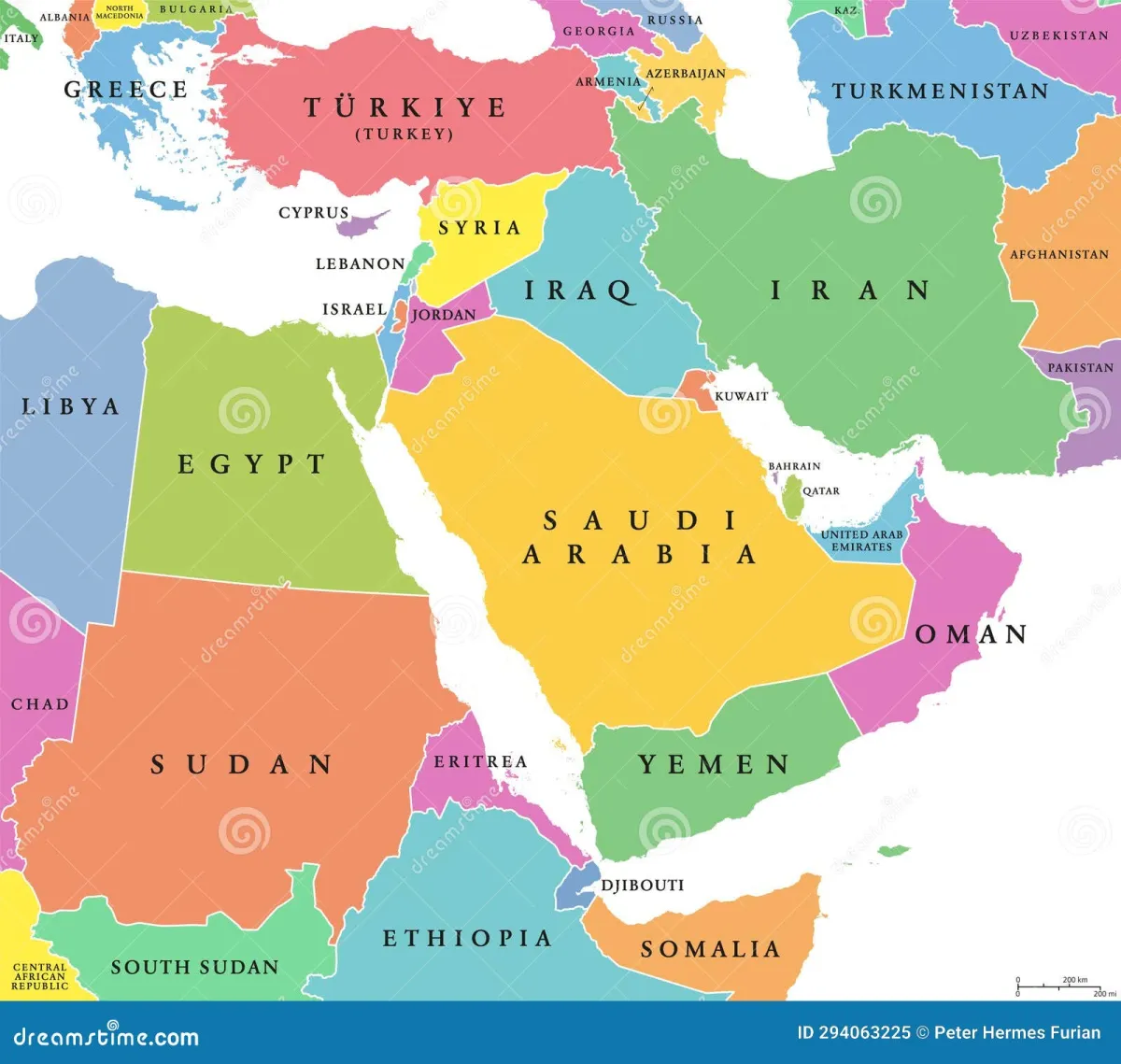 Photo: Middle East, via thumbs.dreamstime.com
The implicit message sent by hyper-efficient outreach is that the American company values the transaction more than the relationship. In cultures where the relationship is the foundation of the transaction, that is a disqualifying signal.
Generic Outreach in a World That Values Specificity
The second major pattern that undermines US international B2B efforts is the use of generic, templated outreach that makes no meaningful concession to the recipient's cultural or business context.
Copy-and-paste prospecting emails that could have been sent to any company in any country communicate one thing clearly: the sending company has not invested time in understanding who they are reaching out to. International prospects — particularly senior decision-makers at established firms in competitive markets — notice this immediately.
Effective cross-border B2B outreach requires demonstrating genuine knowledge of the prospect's market environment, acknowledging local industry dynamics, and framing your value proposition in terms that resonate within their specific context. A US manufacturer of industrial automation equipment pitching a Vietnamese factory needs to speak to Vietnam's current manufacturing challenges, not recycle the same messaging used for prospects in Ohio.
This level of personalization requires research and intentionality. It also requires humility — an acknowledgment that your standard messaging was not designed with this audience in mind.
The Business Card Moment and What It Reveals
For professionals who travel internationally to pursue B2B opportunities, the business card exchange remains a telling indicator of cultural preparation. In Japan, South Korea, and across much of East Asia, the exchange of business cards is a formal ritual that carries genuine symbolic weight. Cards are presented and received with both hands, examined carefully, and treated with visible respect.
 Photo: South Korea, via a.cdn-hotels.com
American business travelers who pocket a Japanese counterpart's card without looking at it, or who write notes on it during a meeting, are committing an offense that their host may not verbalize but will absolutely register. These moments — small in isolation — accumulate into an impression of cultural indifference that poisons the relationship before substantive discussions begin.
The business card example is illustrative of a broader point: the micro-behaviors of international business interactions communicate values and attitudes that no amount of polished pitch deck content can override. Preparation for international meetings must go beyond product knowledge to include genuine cultural literacy.
Negotiation Styles Are Not Universal
American negotiation culture tends to favor directness, clear positions, and relatively rapid convergence toward a decision. Many international negotiation cultures operate on entirely different principles. In several Middle Eastern and Asian business contexts, extended negotiation is itself a form of relationship-building. Prolonged discussion is not a sign of difficulty — it is a sign of seriousness.
US companies that interpret slow negotiation as a lack of interest, or that push aggressively for closure on an American timeline, frequently misread the situation entirely. Worse, the pressure to close quickly can be perceived as a signal that the American company is not a reliable long-term partner — that they are interested in the deal, not the relationship.
Patience is not weakness in international B2B negotiations. In many markets, it is the price of admission.
The Framework for Getting It Right Before the First Meeting
The good news is that these patterns are entirely correctable. The following framework represents a practical starting point for US companies that want to rebuild their international first-impression strategy.
Invest in cultural intelligence before market entry. Before reaching out to prospects in any new international market, invest time in understanding the baseline business culture. Resources including country-specific guides from the US Commercial Service, cultural advisory consultants, and platforms like TradeForce Global can provide structured orientation.
Audit your outreach templates for cultural assumptions. Review your existing international prospecting emails and marketing materials with a critical eye. Identify language that assumes American norms — aggressive CTAs, heavy use of superlatives, price-forward framing — and develop market-specific alternatives.
Lead with relationship, not transaction. Restructure initial outreach to prioritize introduction, shared context, and genuine curiosity about the prospect's business. Save pricing and product specifications for when the relationship has sufficient foundation to support them.
Respect the timeline of trust. Build your international sales pipeline projections around realistic relationship-development timelines for each target market. A deal cycle that takes six weeks in the US domestic market may take six months in a relationship-driven international context. That is not failure — it is how that market operates.
Prepare operationally, not just commercially. Ensure that your company has the capacity to support international partners with localized communication, appropriate response-time expectations, and operational flexibility. A prospect who perceives that your company is not equipped to serve them well will not move forward regardless of how impressive your first meeting goes.
The Competitive Cost of Complacency
American companies that continue to approach international B2B markets with a domestic-first mindset are not just leaving deals on the table — they are actively ceding ground to European, Asian, and regional competitors who have invested in cultural fluency as a core business capability.
The global B2B landscape is more competitive than it has ever been. In that environment, the companies that win are not necessarily those with the best products. They are the ones that understand the markets they are entering well enough to show up correctly — before the first meeting, before the first email, before the first impression is made and, potentially, lost forever.
At TradeForce Global, we connect US businesses with verified international partners and provide the market intelligence and relationship infrastructure needed to compete effectively across borders. Because in global trade, how you show up is as important as what you bring to the table.