Contracts Signed, Margins Erased: How Logistics Blind Spots Are Quietly Draining US Export Profits
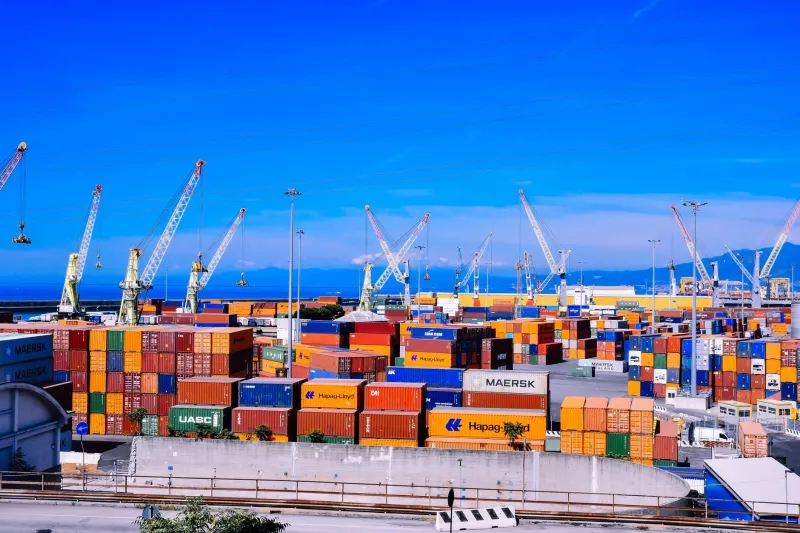
For many US B2B companies entering international markets, the celebration happens at the wrong moment. The contract is executed, hands are shaken — virtually or otherwise — and the sales team moves on to the next target. What follows, however, is often a rude awakening: freight surcharges that weren't anticipated, customs holds that stretch into weeks, and carrier gaps that no one thought to investigate before the ink dried.
This is the logistics blind spot, and it is costing American exporters far more than they realize. The problem is not that companies are careless — it is that cross-border logistics complexity is routinely underestimated during the deal-making phase, treated as an operational afterthought rather than a strategic variable. For businesses serious about sustainable international growth, that sequence needs to be reversed.
The True Cost of Freight Volatility
Anyone who observed global shipping markets during and after the pandemic understands that freight rates are not stable line items. Container costs that once held predictable seasonal patterns became wildly erratic, and while conditions have partially normalized, the underlying volatility has not disappeared. Surcharges — peak season fees, bunker adjustment factors, port congestion fees — continue to shift in ways that can materially alter the economics of a deal.
For a US exporter operating on a 12 to 18 percent gross margin, an unexpected 6 to 8 percent freight surcharge is not a minor inconvenience. It is a structural threat to profitability. Yet many companies build their export pricing models using historical rate data or carrier quotes that carry no guarantee past 30 days, then commit to fixed contract terms extending six months or longer. The math, eventually, stops working in their favor.
Sophisticated exporters are now incorporating freight rate scenario modeling into their pre-contract analysis. Rather than pricing around a single freight estimate, they build in floor, base, and ceiling scenarios — adjusting their contract terms or pricing buffers accordingly. Some are negotiating freight adjustment clauses directly into customer agreements, creating a mechanism to share cost fluctuations rather than absorbing them unilaterally.
Customs Complexity as a Margin Killer
Freight costs are visible. Customs delays are often not — until they become a crisis.
Every international market carries its own import regulations, tariff classifications, documentation requirements, and inspection protocols. A shipment that moves cleanly through one corridor may encounter extended holds in another due to labeling inconsistencies, valuation disputes, or shifting regulatory priorities. For US exporters unfamiliar with a specific destination market, these variables are frequently invisible until a shipment is already in transit.
The financial damage compounds quickly. Demurrage and detention charges accumulate when containers sit at port. Buyers grow frustrated when delivery windows are missed. In relationship-driven markets — which describes a significant portion of the global B2B landscape — a single poorly managed shipment can undermine months of trust-building. Recovering that ground is expensive and time-consuming, assuming recovery is possible at all.
The solution begins well before the first shipment departs. Before signing any international supply agreement, exporters should conduct a destination-specific customs audit. This means engaging a licensed customs broker or trade compliance specialist familiar with the target market, reviewing current tariff schedules and any applicable trade agreement benefits, and confirming that all product documentation — certificates of origin, technical specifications, labeling — meets local import standards. This due diligence is not glamorous, but it is the difference between a deal that delivers and one that deteriorates.
Fragmented Carrier Networks and the Reliability Gap
The carrier network that serves domestic US shipments reliably does not always extend with equal strength into international corridors. Certain lanes — particularly into secondary markets in Southeast Asia, Sub-Saharan Africa, or parts of Latin America — involve multiple handoffs between carriers, freight forwarders, and local last-mile providers. Each handoff introduces a potential point of failure.
US exporters who have not mapped these networks in advance often discover the gaps only when a shipment goes missing, is delayed at an intermediate hub, or arrives damaged due to inconsistent handling standards along the chain. At that point, the buyer's patience has already been tested, and the exporter is managing a problem rather than preventing one.
Building carrier network intelligence into the pre-contract phase means asking specific questions: Which carriers operate reliably on the target lane? What is the average transit time variability, not just the quoted estimate? Are there seasonal disruptions — monsoons, port closures, holiday shutdowns — that affect delivery predictability? What insurance and liability frameworks govern the full journey, not just the primary leg?
Partnering with a freight forwarder that has demonstrated experience on a specific trade lane, rather than defaulting to a generalist provider, is often one of the highest-leverage decisions an exporter can make before a contract is signed.
Building Logistics Intelligence Into the Deal Process
The companies that consistently protect their export margins treat logistics assessment as part of the commercial due diligence process — not a post-contract operational task. This requires a shift in how business development and operations teams collaborate.
A practical framework begins with four pre-contract checkpoints:
1. Total Landed Cost Modeling. Before finalizing pricing, calculate the full cost of delivering goods to the buyer's door — including freight, insurance, customs duties, port fees, and last-mile delivery. Compare this against the quoted contract price to confirm that the margin remains viable under realistic cost scenarios.
2. Destination Market Logistics Assessment. Engage a local or regionally specialized logistics partner to evaluate the specific infrastructure, carrier availability, and customs environment of the target market. Generic assumptions based on US domestic experience are consistently unreliable in international contexts.
3. Risk Allocation Review. Examine Incoterms carefully. The choice between EXW, CIF, DDP, and other terms determines who bears logistics risk at each stage of the journey. Many US exporters default to terms that transfer risk too early, leaving buyers exposed — and dissatisfied — when problems arise.
4. Contingency Planning. Identify backup carrier options, alternative routing, and escalation contacts before a shipment is ever booked. When disruptions occur — and they will — having a tested response plan in place protects both the shipment and the buyer relationship.
The Strategic Argument for Logistics Readiness
There is a broader competitive case to be made here. As global B2B markets grow more interconnected and buyers gain access to a wider pool of international suppliers, reliability becomes a differentiating factor. A US exporter that consistently delivers on time, within cost parameters, and with minimal administrative friction is not just fulfilling a contract — it is building a reputation that generates repeat business and referrals.
Conversely, companies that treat logistics as an afterthought send an implicit signal to international buyers: that operational execution is not a priority. In markets where trust is built through demonstrated competence, that signal is difficult to overcome.
The international opportunity for US B2B exporters remains substantial. But capturing that opportunity profitably requires more than a compelling product and a signed agreement. It requires the logistical foresight to ensure that what is promised can actually be delivered — on time, on budget, and without eroding the relationship that made the deal possible in the first place.