Freight Rate Turbulence: How US B2B Exporters Can Convert Shipping Cost Volatility Into a Strategic Weapon
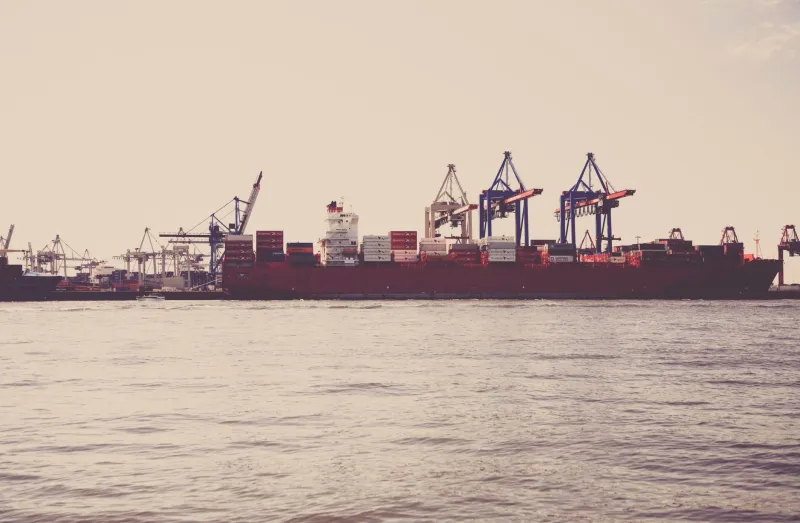
Container shipping rates have become one of the most disruptive variables in international B2B commerce. Between pandemic-era surges, port congestion cycles, Red Sea rerouting costs, and carrier capacity adjustments, US exporters have watched freight expenses swing by hundreds of percent within single fiscal years. For companies with thin margins and long-term contracts, this volatility is not merely inconvenient—it is existential.
Yet across the same turbulent environment, a segment of US exporters has consistently protected margins, retained customers, and in some cases gained market share precisely because shipping costs were rising. They did not accomplish this through luck. They built deliberate systems that convert a market-wide headwind into a structural advantage.
Why Most Exporters Are Still Playing Defense
The default response to freight rate volatility among US B2B exporters is reactive: absorb the increase, renegotiate with buyers after the fact, or pass costs through in ways that damage relationships. None of these approaches is inherently wrong, but all of them position the exporter as a victim of market forces rather than a manager of them.
The core problem is that most exporters price their products using historical freight data rather than forward-looking cost models. When rates shift dramatically—as they have repeatedly since 2020—the gap between assumed and actual logistics costs erodes margins that were already calculated conservatively. By the time the invoice arrives, the deal is already underwater.
A second vulnerability is carrier concentration. Many mid-sized US exporters work with a single freight forwarder or maintain relationships with only two or three carriers. When rates spike industrywide, these companies have no leverage and no alternatives. They pay the market rate because they have no other option.
Dynamic Pricing Models: Building the Rate Into the Deal
The most effective structural response to freight volatility is dynamic pricing—building variable logistics costs directly into contract structures rather than treating shipping as a fixed line item.
This approach requires educating buyers, which is itself a competitive differentiator. US exporters who take the time to explain freight market dynamics to their international partners are building transparency into the relationship. Buyers who understand why prices fluctuate are far more likely to accept adjustments than those who receive unexplained invoice changes.
Practically, dynamic pricing clauses can be structured around published freight indices such as the Freightos Baltic Index or the Shanghai Containerized Freight Index. Contracts can specify that the product price is fixed while the logistics component adjusts quarterly based on a defined benchmark. This approach separates product value from transport cost in the buyer's mind—and protects the exporter's margin regardless of what the market does.
Some exporters go further, offering buyers a choice: a fixed all-in price that includes a freight buffer, or a variable price tied to actual logistics costs. Buyers who prefer predictability self-select into the buffered model, which generates margin when rates fall. Buyers who prefer transparency self-select into the variable model, which protects the exporter when rates rise. Both structures are legitimate; the key is offering the choice deliberately rather than defaulting to one.
Strategic Inventory Placement: Reducing Exposure Before It Begins
Another lever available to sophisticated US exporters is inventory positioning. By pre-staging product in bonded warehouses, foreign trade zones, or third-party logistics facilities closer to key markets, exporters can decouple their shipping decisions from their sales commitments.
When freight rates are low, exporters can move larger volumes to regional hubs. When rates spike, they fulfill orders from existing regional inventory rather than shipping from the US at peak cost. This approach requires capital investment and demand forecasting capability, but the margin protection it provides can more than justify the overhead—particularly in high-volume, repeat-purchase categories.
For exporters serving multiple markets in a single region—say, multiple Southeast Asian buyers or several European distributors—regional consolidation hubs offer additional savings. Shipping a full container to a hub and distributing locally is frequently more cost-effective than shipping smaller loads to individual destinations at varying rates.
Freight Partnerships: Negotiating Leverage You Do Not Have Alone
Carrier relationships are not equal. Exporters with consistent volume, flexible scheduling, and long-term commitments receive meaningfully better rates and priority access to capacity than those who book transactionally. Building this leverage requires deliberate partnership development rather than simple vendor management.
US exporters should evaluate whether their current freight forwarder is functioning as a logistics vendor or a strategic partner. A vendor processes bookings. A partner provides market intelligence, advises on route optimization, flags capacity constraints before they become crises, and advocates for the exporter's interests during peak demand periods.
For exporters who lack sufficient individual volume to command carrier attention, freight procurement consortia and third-party logistics providers who aggregate volume across multiple clients can provide access to rates and capacity that would otherwise be unavailable. This is a structural solution that transforms a size disadvantage into a shared advantage.
Turning Volatility Into a Competitive Signal
Perhaps the most underappreciated dimension of freight volatility is its effect on competitors. When rates spike, undercapitalized competitors with thin margins and poor logistics infrastructure are forced to raise prices, delay shipments, or exit certain markets temporarily. US exporters who have built resilient freight systems can maintain pricing stability and delivery reliability precisely when competitors cannot.
This is not a passive benefit. It requires communicating reliability to buyers actively. Exporters who can demonstrate consistent lead times, stable pricing structures, and transparent logistics communication during periods of market disruption build a reputation that outlasts any single rate cycle. Buyers who experienced supply chain chaos during the 2021–2022 freight surge have long memories. The suppliers who kept them supplied are the ones receiving preferred partner status today.
Freight volatility is a permanent feature of global trade, not a temporary anomaly. US B2B exporters who build their commercial structures around that reality—rather than hoping for stability—will consistently outperform those who do not. The market will keep moving. The question is whether your business is designed to move with it.